
Did you know? Over 60% of HVAC businesses in the United States report stagnant or declining margins—yet those who diversify beyond traditional marketing and hiring are growing twice as fast. As the pace of technological and operational change accelerates, HVAC business owners can no longer afford to rely solely on past formulas. The air conditioning and indoor air quality marketplace has evolved, and so must your growth strategy. This strategic guide provides a business-journalism-informed look at the major trends and advanced, actionable frameworks redefining success for HVAC leaders heading into 2026.
Setting the Stage: New Realities Transforming the HVAC Industry
The HVAC industry is in the midst of rapid transformation. Driven by macroeconomic shifts, technology advancements, and new regulations, today’s marketplace is markedly different from the environment just ten years ago. Electrification and the surge of heat pump installations have changed the core technology mix, reshaping customer needs and operational approaches. At the same time, ongoing labor shortages and supply chain disruptions are squeezing margins for both residential and commercial hvac systems operators.
The landscape is further complicated by a rising tide of competition, including well-funded regional players and rising customer expectations around communication, transparency, and air quality expertise. Traditional methods—ramping up marketing, hiring incrementally, or cutting prices—are no longer enough to maintain competitive advantage in air conditioning or HVAC service markets. Companies are being forced to rethink not just how they sell, but how they operate and grow. Understanding these evolving realities is the first step toward charting a sustainable, strategic path for your HVAC business.

"The HVAC industry today faces challenges and opportunities that would have been unthinkable a decade ago. Business models must evolve if companies are to survive and thrive."
Electrification, Heat Pumps, and the Evolution of HVAC Systems
The shift toward heat pumps and electrification is perhaps the most significant change in the modern hvac system landscape. With states and municipalities ramping up incentives for energy-efficient equipment and carbon footprint reduction, demand for advanced cooling systems and variable-speed units is soaring. Unlike traditional air conditioners or gas furnaces, heat pumps offer year-round climate control and improved air quality, but require a new skillset for HVAC technicians.
For business owners, this shift means greater opportunity but also increased pressure to retrain workers and update service offerings. Companies agile enough to integrate new technologies—such as smart thermostats, air filtration systems, and variable-speed air handler solutions—are positioning themselves as industry leaders. As customer expectations for efficiency and system intelligence rise, the ability to deliver expert consultation on all aspects of air conditioning and indoor air quality is becoming a true competitive advantage.
Labor Shortages and the HVAC Technician Squeeze
Labor scarcity is the Achilles’ heel of the modern hvac industry. According to national data, the demand for new hvac technicians outpaces supply, driven by an aging workforce, the technical nature of heat pumps, and fewer young entrants. This talent gap puts mounting strain on expansion plans and makes hiring (and retaining) skilled workers a major strategic imperative for HVAC business owners across the United States.
Complicating matters, many firms lack formal apprenticeship programs or structured in-house training. Companies that develop clear HVAC technician pipelines—partnering with trade schools, upskilling junior staff, and building progression frameworks—can mitigate churn and achieve resilient, scalable capacity. Addressing the technician shortage is no longer a matter of convenience; it’s a keystone for growth in air conditioning, heating, and air quality markets.
Supply Chain Volatility and Operational Pressures
Global supply chain disruptions have become a consistent challenge, impacting the availability and pricing of critical hvac componentry—from air handlers and ac units to digital sensors and sheet metal parts. Even minor delays can ripple through project timelines, clashing with rising customer expectations and straining already-tight HVAC schedules.
To remain resilient, leading companies are fortifying supplier relationships, diversifying sourcing strategies, and proactively managing inventory cycles. The successful hvac business owner of 2026 will be one who integrates supply chain contingency into every operational decision, using forecasting and cross-trained technician teams to absorb volatility and maintain operational continuity.
Escalating Competition and Rising Customer Expectations in HVAC
The modern HVAC marketplace is increasingly crowded. Alongside established operators, tech-forward startups and regional consolidators are leveraging digital tools and aggressive marketing to gain market share. This rising competition is shifting the ground under traditional players, making differentiation by expertise and air quality outcomes all the more important.
Customers now expect seamless scheduling, transparent pricing, data-rich diagnostics, and real-time communication—even for routine air conditioner servicing. Meeting these demands requires innovation not only in technology but also in process design—from system monitoring to customer service protocols. Only businesses who evolve in parallel with these expectations will continue to thrive in the changing HVAC marketplace.
| Trend | Impact on HVAC Businesses |
|---|---|
| Electrification & Heat Pumps | Requires new skills, changes product mix, elevates energy efficiency standards |
| Labor Shortages | Raises personnel costs, intensifies focus on workforce pipelines |
| Supply Chain Disruptions | Causes delays, necessitates multi-sourcing and advanced planning |
| Technology Adoption | Demands ongoing training and digital process integration |
| Customer Service Expectations | Drives need for transparency, responsiveness, and personalized service |
Redefining Growth: Innovative Approaches in HVAC
“Innovation” in the hvac sector is no longer limited to new gadgets or surface-level upgrades. For owners determined to expand capacity and build sustainable revenue, the real breakthroughs are taking place in business model design, data-driven management, and strategic workforce development.
In a landscape where air conditioning service and indoor air quality are increasingly commoditized, forward-looking owners are shifting from transactional thinking (one-off installs and repairs) to building ongoing customer relationships, leveraging analytics for smarter resource use, and embracing specialization as a way to stand out in the marketplace.

Transitioning HVAC Services from Transactional to Recurring Revenue Models
A pivotal strategic shift is the move away from traditional, project-by-project sales toward recurring revenue models. Service agreements, system monitoring subscriptions, and recurring maintenance plans have become mainstays of forward-thinking hvac companies. These approaches not only stabilize cash flow but also deepen customer relationships and create more predictable, sustainable growth.
For example, comprehensive indoor air quality care plans encourage annual checkups, while monitoring agreements for air conditioning and cooling systems provide ongoing touchpoints and the opportunity to upsell efficiency upgrades when aging or stressed equipment is detected. Over time, this business model grows total customer lifetime value, reduces dependence on one-time installations, and creates a natural moat against competition.
- Service agreements
- Air conditioning and system monitoring subscriptions
- Recurring maintenance programs
- Extended indoor air quality care plans
Leveraging Data Analytics for HVAC System Optimization and Forecasting
Harnessing data is a hallmark of today’s most profitable hvac businesses. Modern operations rely on analytics to boost operational efficiency, guide technician performance, and manage seasonal demand. Leaders use job costing and system analytics to identify high-margin segments, root out inefficiencies, and allocate labor where it delivers maximum return.
Forecasting demand for air conditioning systems during peak seasons allows companies to scale labor, procure inventory more efficiently, and reduce costly overtime. Performance insight into each hvac technician—from time on task to first-call resolution rates—drives targeted coaching and rewards. Data-driven management supports better inventory control (minimizing air handler stockouts) and provides an authoritative platform for growth decisions.

- Job costing and heat pump analytics
- HVAC technician performance insight
- Seasonal demand planning for air conditioning systems
- Reducing overtime and resource waste
Specialization: Gaining a Competitive Edge in the HVAC Market
In the modern air conditioning market, depth often beats breadth. Specialization—focusing on advanced heat pumps, high-efficiency hvac systems, specific market niches (such as indoor air quality solutions), or variable-speed air handlers—drives differentiation. Specialist companies command higher close rates and better pricing power, while broad-based generalists often struggle to stand out in a crowded field.
Commercial vs. residential focus can also lead to greater efficiency and expertise, allowing teams to consolidate around best practices, targeted equipment training, and optimized customer interactions. Ultimately, specialization bolsters reputation via word-of-mouth and digital reviews, helping HVAC business owners to build durable barriers against commoditization—especially in rapidly evolving technical areas like indoor air filtration or energy-efficient ac systems.
- Heat pumps and variable-speed equipment
- High-efficiency HVAC systems
- Indoor air quality and air filtration niches
- Commercial vs. residential specializations
Scalable Workforce Development Pipelines for HVAC Technicians
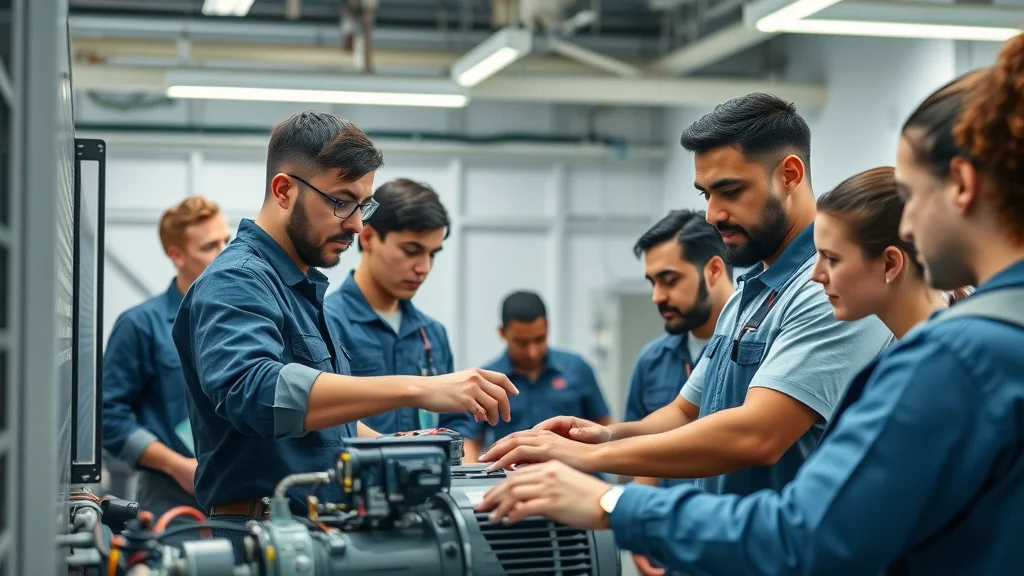
The industry’s labor bottleneck makes systematic workforce development a mission-critical priority. The most successful hvac companies have moved beyond informal hiring to architect rigorous training and advancement pipelines for hvac technicians. Professional apprenticeship models, partnerships with local trade schools, and structured in-house certification frameworks ensure a steady flow of capable, motivated workers able to manage modern equipment—from advanced air conditioners to smart thermostats and complex air handlers.
Top-performing organizations create clearly defined progression paths, moving promising juniors into intermediate roles and, over time, leadership positions responsible for supervising teams or overseeing specialized niches like indoor air quality testing or heat pump commissioning. Such approaches reduce turnover, build internal loyalty, and expand capacity without compromising quality.
- Apprenticeship models and HVAC technician pipelines
- Partnerships with trade schools for air conditioning talent
- Structured in-house training—air handler, air conditioner tech skills
- Progression from junior to senior and into HVAC system leadership roles
Expanding Through Strategic Partnerships in the HVAC Industry
Growth does not always require heavy capital investment or direct market entry. Strategic partnerships—collaborations with general contractors, property management firms, energy auditors, and even solar installers—can unlock new revenue pools and extend geographic reach at minimal cost. These symbiotic relationships boost hvac businesses by channeling high-quality leads and providing opportunities for bundled services, such as ventilation upgrades or full-system retrofits.
Such alliances are especially valuable where customers demand integrated solutions for mechanical ventilation, energy savings, and air quality management. By forging connections with industry-adjacent players, HVAC owners can focus resources on technical excellence and trusted service delivery, while partners open doors to projects (e.g., new construction or green retrofits) that would otherwise be out of reach.
- Collaborations with general contractors and energy auditors
- Synergies with property management and solar installation firms
- Mutual benefit with home performance and ventilation system specialists
Geographic Expansion: Standardizing HVAC Operations for Replication
Many owners dream of expanding into new territories. Sustainable geographic growth, however, depends on the ability to standardize and replicate proven operational processes. This means developing high-quality, repeatable systems for training, service delivery, and customer management, then applying these frameworks in adjacent or demographically similar markets.
This approach—closely aligned with the best practices seen in scaled franchise operations—protects brand integrity, ensures consistency across sites, and builds confidence among both staff and customers. The future-ready HVAC business does not expand haphazardly but rather brings disciplined process management to every location, maximizing the likelihood of profitable, high-performance regional growth.

"For HVAC owners, replicating strong processes in adjacent markets can lead to sustainable, profitable expansion."
The Profit Impact of Modernizing HVAC Growth Strategies
Why do these innovations matter at the financial level? Because modernized, data-driven, and recurring-revenue based hvac businesses enjoy reduced earnings volatility, higher margins, and increased customer retention compared to their transactional peers. Service agreements create steady cash flow, while advanced training systems and workforce pipelines dramatically lower technician churn—historically one of the largest hidden costs in the sector.
Differentiated offerings (from indoor air quality to specialized heat pumps) increase close rates and make marketing spend more efficient. Strategic partnerships mean reduced cost per lead, and deep integration of analytics puts leaders in control of everything from inventory spend to employee performance bonuses. The real bottom line: Innovation isn’t just about technology—it’s about unlocking a more robust, predictable profit engine for your hvac business.

- Predictable revenue from service agreements
- Higher margins through data-driven operation of HVAC systems
- Differentiation boosts air conditioning close rates
- Strong technician training slashes turnover and improves indoor air quality solutions
- Strategic partnerships reduce HVAC customer acquisition costs
| Financial Metric | Modernized (Recurring Model) | Traditional (Transactional) |
|---|---|---|
| Profit Margin | 15-22% | 6-12% |
| Revenue Volatility | Low-Moderate | High |
| Customer Retention | 70-90% | 40-55% |
Addressing Common Barriers to HVAC Innovation
If innovation were easy, every hvac company would already be a recurring revenue powerhouse. The truth is, most owners face real obstacles—from process bottlenecks and burnout to change resistance and financial uncertainty. Identifying and addressing these barriers honestly is the first step toward future-proofing your business.
Chronic burnout undermines strategic thinking, while lack of formal processes hampers scale efforts. Many teams bristle at change, especially when it alters long-standing routines or requires new technology training. Financial visibility—without up-to-the-minute analytics—can make owners hesitate to invest in equipment, training, or partnerships. These challenges are widespread, but actionable strategies can help overcome them.
Tackling Owner Burnout and Process Gaps in HVAC Companies
The job of an HVAC business owner is demanding, often at risk of burnout. Wearing too many hats and making every critical decision alone is a sure path to stagnation. Process documentation—clearly outlining service steps, training protocols, and performance metrics—is crucial for scaling operations and delegating tasks. This allows owners to step back from daily firefighting and focus on long-range, strategy-first growth.
Building a culture of accountability starts with mapping out what currently works, where gaps exist, and which team members can take ownership of key initiatives, from mentoring new hvac technicians to managing recurring air quality plan renewals. Only then can the business shift from owner-centric survivalism to resilient, systematized growth.

Managing Change Resistance and Team Engagement
Change is hard, especially for seasoned teams used to traditional hvac system operations. Resistance can be overcome with transparency, communication, and clear demonstration of the value—both for the company and for employees—of new approaches such as data analytics, remote system monitoring, or advanced air conditioner maintenance plans.
Engagement rises when staff is involved in the rollout process and given both ownership and agency to shape innovation. Ongoing training, open forums for feedback, and clear metrics around success foster buy-in and help build a bottom-up rather than a top-down culture of adaptation.
Ensuring Financial Visibility Through Data-Driven HVAC Management
A pervasive fear among hvac owners is investing in innovation without knowing the ROI. Combatting this anxiety starts with financial transparency: implementing data-driven dashboards that measure margin, technician efficiency, and recurring revenue growth. This visibility enables smarter decision making, motivates team responsibility, and prevents costly bottlenecks or overextensions in everything from inventory to staffing.
"The road to innovation starts with honest self-assessment—what’s holding your HVAC company back?"
Action Plan: How HVAC Owners Can Begin Implementing Innovation
Adopting innovative growth strategies in your hvac business doesn’t require wholesale transformation overnight. Instead, the most effective approach is focused, stepwise, and measured. Here’s how to structure your path forward:
- Evaluate your current HVAC business model (transactional vs. recurring)
- Select one high-impact innovation (not five)
- Document a strategic roadmap: roles, changes, timeline
- Train HVAC leaders to delegate and adapt
- Measure outcomes: margin, efficiency, retention
People Also Ask: Financial Realities and Career Perspectives in HVAC
Can HVAC make $100,000 a year?
Answer: Earnings in the HVAC field are highly variable, but top-performing HVAC owners, managers, or senior HVAC technicians in profitable regions can reach or exceed $100,000 annually, especially with effective recurring revenue and efficient service models.
What is the $5000 rule for HVAC?
Answer: The "$5000 rule" in HVAC is a rule-of-thumb used to decide whether to repair or replace a cooling or heating unit: Multiply the age of the unit by the cost of repairs, and if that amount exceeds $5000, replacement is typically recommended for cost-effectiveness.
Is HVAC good for money?
Answer: A well-managed HVAC business or specialized technician can yield strong financial rewards, especially where innovative business models—such as recurring service agreements and data-driven operations—are implemented to optimize profitability.
Is HVAC a hard job?
Answer: HVAC roles are demanding, requiring technical proficiency, physical endurance, and ongoing learning to keep up with new technologies, air conditioning systems, and customer expectations. Despite challenges, many find it rewarding and see strong career prospects.
Strategic Key Takeaways for Modern HVAC Business Owners
- HVAC growth requires innovation beyond traditional marketing or pricing
- Recurring revenue and data leverage stabilize profits
- Workforce development and specialization empower market advantage
- Barriers must be faced candidly for success
- Focused, step-by-step innovation trumps scattershot change
Frequently Asked Questions: HVAC Growth, Air Quality, and Industry Trends
- What is the most innovative revenue model for HVAC?
- How can HVAC companies address labor gaps strategically?
- Which HVAC system specialty is expected to grow fastest?
- How do indoor air quality and air handlers create recurring business?
A Forward-Focused Approach: Why Innovation Is Non-Negotiable for HVAC Success
"Modernization in the HVAC industry means embracing measurable, scalable change—not chasing trends, but building a future-ready business one step at a time."
What You'll Learn in This HVAC Strategic Guide
- The industry forces shaping HVAC growth strategies in 2026
- Modern HVAC recurring revenue models and their benefits
- Ways to leverage HVAC system data and technician analytics
- Specialization avenues—heat pumps, air quality, commercial niches
- Effective approaches to build strong technician teams
- How to overcome innovation obstacles
- Action steps to implement transformation in your HVAC business
Conclusion: Future-Proofing Your HVAC Business with Strategic Innovation
The Path Forward for HVAC Owners
"Innovation in HVAC isn’t about following fads: It’s about building sustainable value and resilience for the next era of service excellence."
Ready to revisit your HVAC growth blueprint? Subscribe for more strategic insights and actionable frameworks.
Sources
- ACHR News – Best Practices for HVAC Growth
- Harvard Business Review – How Small Service Businesses Can Scale
- Contracting Business – How HVAC Companies Grow in 2025
- Forbes – Small Business Strategic Shifts
- U.S. Department of Energy – Building Technologies Office
To further enhance your understanding of innovative growth strategies for HVAC businesses, consider exploring the following resources:
- “HVAC Trends in 2026: Smarter, Cleaner, and More Energy-Efficient” (greyb.com)
This report delves into key developments reshaping the HVAC industry, including the integration of AI-powered sensors, self-cleaning filter systems, and smart occupancy detection, offering valuable insights to guide your R&D strategies.
- “HVAC Trends to Watch in 2026 | Oxford Air Conditioning” (oxfordairconditioning.com)
This article highlights emerging trends such as the adoption of low-GWP refrigerants, the rise of ultra-low-noise HVAC systems, and the increasing importance of smart controls and building automation, providing a comprehensive overview of the industry’s direction.
If you’re serious about staying ahead in the evolving HVAC landscape, these resources will provide you with the knowledge and strategies needed to adapt and thrive.


Write A Comment